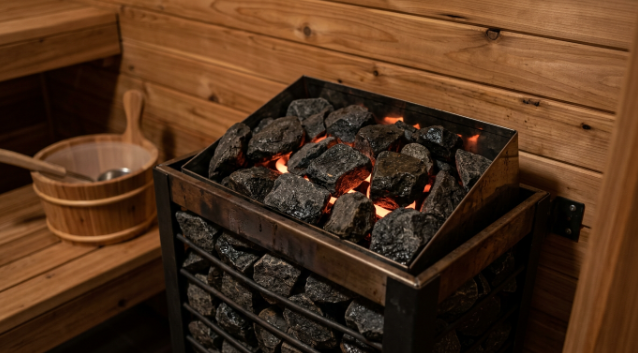
On a tight budget, four accessories matter more than everything else combined: correctly rated sauna rocks, a guard rail if the heater does not already include one, a heat-resistant floor mat under the unit, and a basic thermometer and hygrometer pair. Together these typically add $80 to $150 to a build and cover both safety and a usable session, while extras like headrests, aroma diffusers, and speaker mounts can wait until the core setup is proven.
Start With the Rocks, Not the Extras
Sauna rocks are not decorative. They need to be a dense volcanic type rated for repeated heat cycling, typically peridotite or olivine, sold specifically for sauna use rather than pulled from a landscaping pile. Cheap or wrong-type stone can crack and pop under thermal shock when water hits it, sending sharp fragments toward the heater’s internal components. A 40-pound bag runs $30 to $50 and should be checked every six to twelve months, with any chipped, cracked, or scale-coated stones pulled and replaced. This is the one accessory that directly affects both heater performance and basic safety, so it belongs at the top of any budget list, ahead of anything cosmetic.
Add a Guard Rail Before Anyone Uses the Room
Many budget heaters ship without a guard rail, or with a minimal one that leaves the sides exposed. A proper rail keeps bathers and towels several inches clear of surfaces that can exceed 400 degrees at the rock bed, and it typically costs $40 to $90 depending on the heater’s footprint. Skipping this to save money is the single riskiest cut on the entire list, since a heater without adequate guarding is a contact-burn hazard the first time someone reaches for a towel or leans back on a narrow bench. If a heater model does not offer a matching rail, a universal one sized to the unit’s dimensions is worth sourcing before the sauna goes into regular use.
Put Something Heat-Resistant Under the Heater
A floor mat or non-combustible base pad under the heater protects the wood floor from scorching and catches the occasional water splash from pouring over the rocks. Options range from a simple ceramic tile insert for $20 to a purpose-built heater mat for $50 to $80. This is easy to treat as optional on a bare-bones build, but repeated splashing on unprotected cedar or pine flooring leaves dark water stains and, over years, softens the wood near the heater’s base. A mat is one of the cheapest items on this list relative to the damage it prevents.
Get a Thermometer and Hygrometer Before Guessing at Temperature
A combined thermometer and hygrometer, usually $15 to $35 for an analog dial or a bit more for a digital display, tells a bather the actual room temperature and humidity rather than a guess based on how the air feels near the door. This matters more on a budget build than a premium one, since smaller heaters and looser-sealed cabins can swing further from expected temperature than a name-brand cabin with tighter tolerances. Knowing the room has actually reached 170 or 180 degrees, rather than assuming it based on how long the heater has run, is a small purchase that removes most of the guesswork from a session.
Which Extras Are Worth the Money, and Which Can Wait?
A bucket and ladle rated for sauna use, typically $25 to $45 for a cedar set, earns its place because pouring water over the rocks is central to a traditional session and a flimsy plastic substitute can warp or melt near the heat. A basic session timer, $20 to $40, is a close second, letting the heater shut off automatically rather than relying on someone remembering to check a phone. Past that point, headrests, backrests, aroma oil diffusers, and built-in speakers are genuine comfort upgrades but add nothing to how well the heater performs or how safe the room is, so they belong on a wish list rather than the initial budget. Retailers stocking heaters in this range often bundle a starter accessory kit with the unit, and it is worth comparing what is actually included before buying extras separately; a good place to start is to view current pricing across a few models to see which bundles already cover the essentials above.
Is a Basic Maintenance Kit Worth Adding?
A soft-bristle brush for clearing dust off the rocks, a small handheld vacuum or brush for the space between rocks and the heater frame, and a bottle of wood-safe cleaner for benches round out a reasonable starter kit for $30 to $50 combined. None of these items affect how the heater performs on day one, but a heater that sits with dust and mineral buildup accumulating in the rock bed loses airflow through the stones over months of use, which slows how quickly it reaches temperature. A five-minute wipe-down after a handful of sessions, using the brush rather than water on the heater housing itself, keeps the unit closer to its rated output for longer without any specialized tools.
What Does the Research Say About the Sessions These Accessories Support?
None of these accessories change the underlying health picture tied to sauna use, which comes from the heat exposure itself rather than the equipment around it. A systematic review in Evidence-Based Complementary and Alternative Medicine summarized clinical effects reported across a range of regular dry sauna bathing studies. A 2018 review in Mayo Clinic Proceedings covered cardiovascular associations reported across multiple cohort studies of frequent sauna use. An earlier review in the American Journal of Medicine outlined similar associations along with recognized risks for certain groups. These findings describe population-level associations, not a guarantee tied to any specific heater, rock type, or accessory, and none of them are causation claims.
Frequently Asked Questions
What accessories does a sauna heater actually need to work safely? Beyond the heater itself, the essentials are properly rated sauna rocks, a guard rail if the model lacks one, a heat-resistant floor mat, and a basic thermometer and hygrometer.
Do sauna rocks need to be replaced regularly? Yes, most manufacturers recommend checking rocks every six to twelve months and replacing any that are cracked, chipped, or coated in mineral scale.
Is a sauna timer worth buying on a tight budget? A basic timer, often $20 to $40, lets a heater run unattended for a set session and shut off automatically, which is both convenient and a good safety habit.
What should never be skipped even on a bare-bones sauna build? The guard rail around the heater and a properly rated bucket and ladle. Both are inexpensive relative to the heater and skipping either raises the chance of a burn or thermal shock to the rocks.
References
- Clinical Effects of Regular Dry Sauna Bathing: A Systematic Review, Evidence-Based Complementary and Alternative Medicine, 2018
- Cardiovascular and Other Health Benefits of Sauna Bathing: A Review of the Evidence, Mayo Clinic Proceedings, 2018
- Benefits and risks of sauna bathing, The American Journal of Medicine, 2001
By Marcus Hale